
Page 7 - Our advices
-
See advice
Ratchet Winch
+Mechanism simple and proven
+Minimal maintenance
+Use with cable or strap
+Low price
-Use carefully to avoid ratchets coming loose
-Danger of crank rotation when the boat descendsBrake winch
+Holds the boat manually when raising
+Avoids accidental crank returns
+Same low maintenance as ratchet models
+May be used with cable or strap
-More expensive than ratchet modelsElectric Winch
+Raises the boat without effort
+Recommended for heavy loads
-Major energy consumer
-More expensive than other winches -
See advice
These days it’s much easy to enter the world of sailing. Whether you are an amateur or experienced sailor, or someone who simply wants to enjoy the pleasures of boating and charter a yacht with a skipper. You no longer need to own your own boat to be able to set sail.With your computer, smartphone or tablet, all it takes is a few clicks to rent a catamaran, a sailboat or a luxury yacht, becoming the starting point of your next holiday.
-
See advice
Dressing according to the type of sailing
The jacket, because of its design, is more waterproof than the vest and, if it has an effective tightening system, such as a neoprene band, closes more firmly around the neck. The size must be chosen correctly and should also close with a band. Efficient yes, but less convenient to put on than a vest. The vest though, is more difficult to seal. It is necessary to use models that hold squarely at the collar, with hermetically sealed or double pockets. The seams must also be sealed and fitted with a flap closure.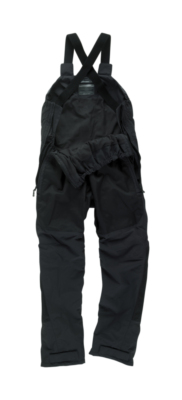
Breathable three layered system
On a boat, we often undertake short intense periods of effort followed by periods of inaction. It is necessary therefore, that one is able to perspire during the effort and not remain damp the rest of the time, as this may engender a sensation of cold. The new materials permit perspiration to move toward the exterior and keep the body dry. This system, if followed to the letter, functions very well.
First layer -
See advice
Regulations
For, “coastal,” category navigation (no more than 2 miles from the coast,) the magnetic compass is obligatory by regulation. Prudence should demand it however, whatever the category.Homologation
Attention, certains compas dans ce catalogue ne sont pas homologués. Ils ne doivent pas servir pour la navigation mais peuvent être placés dans une cabine ou le carré pour surveiller le cap.The right choice
One selects a compass according to function and rose diameter. It is the latter that determines ease of reading. A small rose must be close to the helmsman, the larger rose may be further away. The diameter should be chosen according to vessel size and helmsman’s position. In general a diameter of 75mm is reserved for boats of 9m and less, one of 90mm for those between 9 to 12m and one of 135mm for those larger than 12m. Of course these sizes must be related to reading distances. For good visibility one finds three types of rose: plate, conical and cylindrical. On a plate the reading -
See advice
A legal obligation
AD stores offer solutions adapted to your needs in accordance with the law in force (Decree 2009 no.2009-393 from 8th April 2009.) (See table.)
-Registration numbers for ships and water vehicles.
-Name of ship and registration initials for sailing vessels from 7 metres.
-Dinghies: AXE + name of carrying vessel.
Letters and numbers are in adhesive form. They are delivered with a support/transfer easy
to use, regular spacing and perfect alignment. You can also personalise your markings.
Different fonts and colours in vinyl are in the catalogue. We offer two types of adhesives: for soft shells (pneumatic) and hard (alu, polyester…) Contact your local AD stockist for order forms.
Good to know: An internal identification mark is compulsory for all ships registered for
the first time from 1st June 2009 and for all ships from June 20102. It consists of the registration number visible near the pilot’s position in the cockpit, the dimensions are free.
Types of boat Length External