Standard ISO 9650 Life raft This international standard has been in force since 2005 and covers all rafts of recreational craft of less than 24m in length. Two types of raft are regulated by this standard: coastal ISO 9650-II and the high seas ISO-9650-1. ISO 9650 type II rafts. Type II rafts are adapted to coastal navigation. They are less robust than the type I but more lightweight. They are designed to inflate at a temperature of between 0 ° C and 65 ° C. The bottom of the raft is simple and of standard strength. They are designed for mild weather. ISO 9650 type I raft This category is divided into two classes; A and B. The class A is stronger than the class B. There are also differences in inflation temperature and the design of the bottom. The class A can be inflated between -15 ° C and 65 ° C and the bottom is doubled. The class B between 0 ° C and 65 ° C and h as a simple bottom. In both classes, the equipment may be erected rapidly and hold up for 24 hours or more, until
The regulations imposed for navigation of less than 2miles from shelter, are individual equipment (vest or jacket,) of 50 Newtons. You will not find them in our guide (except special dinghy vest.) For sailing between 2 and 6 miles, the regulations require 100 Newton models. For this zone the harness and lanyard are not obligatory. Beyond 6 miles, it will be better to replace 150 Newton foam vests, with inflatable life jackets. This is the type of equipment one purchases for themselves and which serves one well when travelling on different vessels.
Salt pellet or hydrostatic?
All automatic vests also have a manual activation system. This may be salt tablets, which disintegrate in water, freeing the CO ² bottle’s trigger release. The models we offer have a spray protection system to prevent accidental release. The hydrostatic valve (Hammar system,) activates under water pressure. Theoretically 10cm of water is sufficient. Note, that although the hydrostatic system is attractive
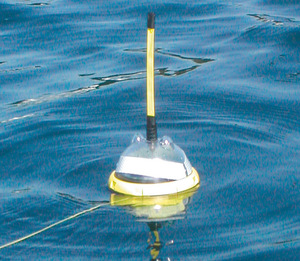
A number of solutions are possible when one considers the GPS, the autonomy and the type of beacon.
In the satellite distress beacon range one finds the EPIRB (Emergency Position Indicating Radio Beacon,) and the PLB (Personal Locator Beacon.)
The EPIRB are the largest. They are connected to a boat and float. The personal beacons are the smallest. They do not float but function even on land.
The localisation of the beacon is assured by satellite. It is sometimes necessary to use several satellites to do this precisely (more time.) If the beacon is equipped with GPS it can send its own position to the satellite. The localisation is thus faster, more precise and may provide more help.
The autonomy is 24 to 48 hours (continuous,) according to model.
With the EPIRB type, it is also coded with the MMSI number of the boat. On the PLB there is a choice between the MMSI number and the name of the user (along with contact info of people to inform in case of problems).
The regulations require a fire extinguisher for every habitable 20 m2. For a motor compartment, one may use a remote control model. Ideally, install an extinguisher per cabin. Always think about the accessibility of the fire extinguisher after the fire has started. For the galley, it is prudent to double up with a fire blanket.
Act quickly
The speed of response is paramount ,especially as the operating time of a fire extinguisher is very brief. Count on 6 seconds for a model of 1 kg, for a 2 kg model on 8 to 10 seconds and 25 seconds for a 6 kg. All models have the same trigger system. Do not wait until a fire starts to read the manual.
Agir vite La vitesse d’intervention est primordiale et ce d’autant plus que le temps de fonctionnement d’un extincteur est très bref. Comptez 6 secondes pour un modèle de 1 kg, pour un 2 kg de 8 à 10 secondes et 25 secondes pour un de 6 kg. Tous les modèles n’ont pas le même système de déclenchement. N’attendez pas un départ de feu
Less than 2 miles No flares Coastal 2 to 6 miles 1 set of 3 SOLAS approved hand flares Offshore, more than 6 miles 1 set of 3 SOLAS approved hand flares 3 SOLAS approved parachute flares 2 SOLAS approved smoke cannisters (Flares and smoke are not mandatory if the boat is equipped with VHF DSC coupled with a GPS.)
Go beyond the regulations
Less than 2 miles from shelter no flares are obligatory. Do though, take at least 3 hand flares, a small investment that may prove useful to indicate distress. Between 2 to 6 miles, it is advisable to move toward a kit identical to that of navigation of at least 6 miles. Be aware that the three parachute flares and two buoyant smoke are no longer demanded if you have an onboard VHF DSC coupled with a GPS. This is an aberration! In case of problems, the responsibility of whoever is in charge onboard, should be inititated. Beyond 2 miles from a shelter you can complete your safety equipment with glow sticks (Cyalume), white anti-collision



 A number of solutions are possible when one considers the GPS, the autonomy and the type of beacon.